What a Yakima Roof Goes Through From Fall to Spring, and the Check That Catches Trouble Early
Most winter leaks start as small fall problems, and most of them can be spotted before the first hard freeze.
October 8, 2026 · 4 min read
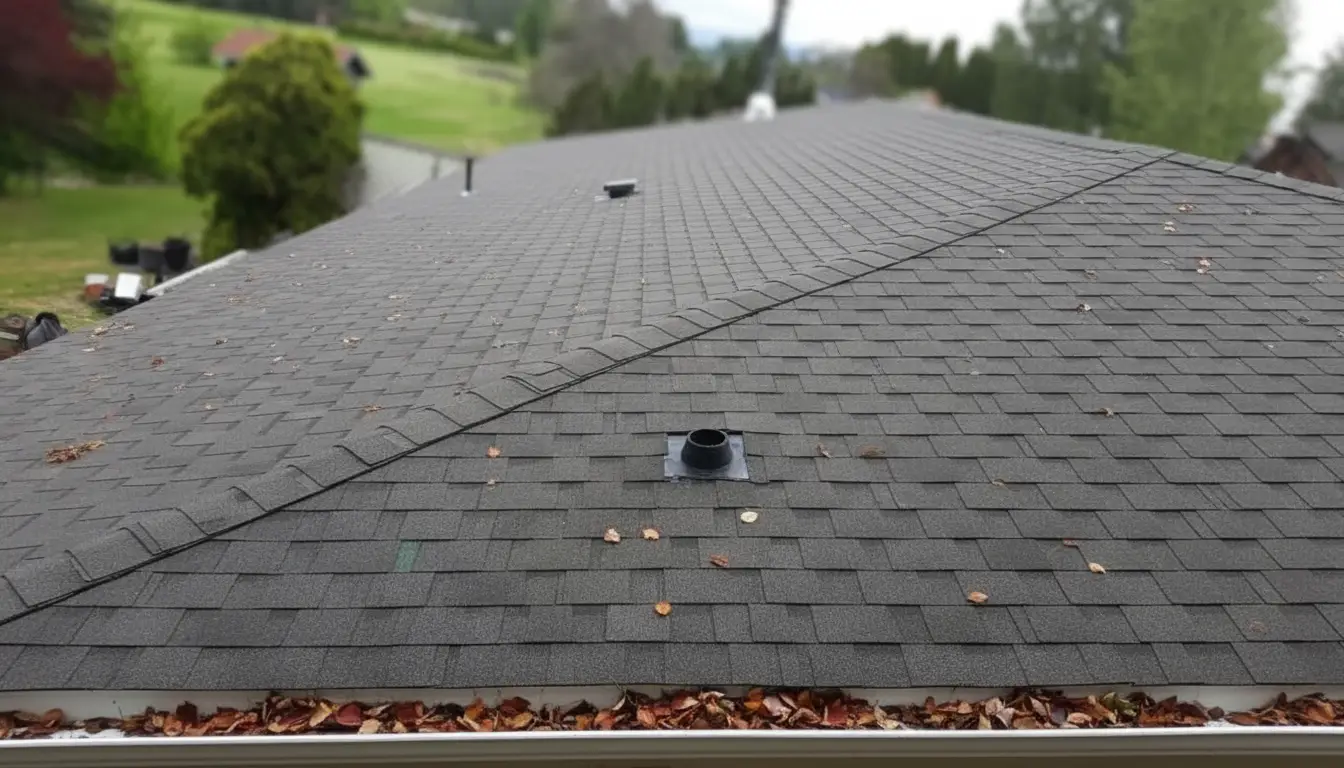
Here's a question we ask on our own website: do you ever wonder what your roof goes through every time the season changes? In the Yakima Valley the honest answer is a lot. Hot dry summers, cold nights, frost, snow, wind, and then a thaw. A roof takes all of it without complaining, right up until the day a ceiling stain shows up.
Why the change of seasons is the hard part
Roofing materials expand a little when they warm up and shrink when they cool down. That happens every day, and the day-to-night swings in this part of the state can be big. Over years, that constant movement works on seams, fasteners, sealants, and the edges of flashing.
Winter adds another trick. Water gets into a small gap, freezes, and expands. When it thaws, the gap is a little wider than before. Repeat that enough times and a hairline crack turns into a place where water walks right in. Nothing dramatic happens on any one day, which is why these problems get missed.
Start with the valleys and gutters
Fall is leaf season, and leaves go where the water goes. Roof valleys, the V-shaped channels where two roof planes meet, carry more water than any other part of the roof. When they fill with leaves, needles, and grit, water backs up and finds its way under shingles that were never meant to sit in a puddle.
Gutters have the same problem. A clogged gutter holds water against the roof edge, and in a freeze that water turns to ice. Ice at the eave can lift shingles and push water back up the roof. Clear the gutters after the leaves drop, and make sure the downspouts actually move water away from the foundation.
Flashing and pipe boots
Flashing is the thin metal that seals the places where a roof is interrupted: chimneys, skylights, walls, vents. When flashing lifts, rusts, or loses its sealant, those spots become the first leak. They're also easy to check from a ladder at the edge or with binoculars from the yard.
Pipe boots deserve their own mention. These are the rubber or neoprene collars around plumbing vent pipes. The sun is hard on them, and a cracked boot lets water run straight down the pipe and into the house. It's a small part, a common leak, and usually a quick fix when it's caught early.
Look at the roof surface
Whatever your roof is made of, the surface tells you how it's aging. Here's what to look for from the ground or a safe vantage point:
- Shingles that are curled, cracked, or missing, or bare patches where the granules have worn away.
- Dark streaks or heavy moss in shaded areas, which hold moisture against the roof.
- Wood shakes that are split, cupped, or worn thin.
- On flat or low-slope sections, blisters, ponding water that lingers after rain, or seams that have opened up.
- Loose debris, branches, or anything that landed on the roof after a windstorm.
Please don't climb a steep or wet roof to do this yourself. A ladder at the edge and a good pair of binoculars will tell you plenty, and a fall off a roof is a much bigger problem than any leak.
Some of the best evidence is indoors. Look at the ceilings, especially near exterior walls, chimneys, and under bathroom vents. A faint brown ring, a bubble in the paint, or a damp smell after rain deserves attention. If you can get into the attic with a flashlight, look for dark stains on the underside of the roof deck, damp insulation, or daylight where it shouldn't be.
Small stains are easy to dismiss. We don't recommend it. Our site says it plainly: leaks on your roofs should never be taken lightly, because taking them for granted may lead to bigger problems. A fix now is almost always smaller than the fix after a winter of seepage.
What a fall and winter inspection covers
Fall & Winter Inspection is one of the services we list for homes and commercial buildings. The idea is simple: have someone who works on roofs every day go over yours before the cold sets in, spot the weak points, and tell you what needs attention now and what can wait. It's a lot cheaper to learn about a failing boot in October than to learn about it from a wet ceiling in January.
We don't publish prices for inspections, since every roof and building is different. Call us and we'll talk through what you've noticed and what makes sense.
A simple fall checklist
- Clear leaves and debris from gutters, downspouts, and roof valleys.
- Look at flashing around chimneys, vents, skylights, and wall joints.
- Check pipe boots for cracks or gaps.
- Scan the roof surface for lifted, cracked, or missing material.
- Check ceilings and the attic for stains, damp spots, or daylight.
- Trim branches that touch or hang over the roof.
If you find something, or you'd just like a professional to take a look before the weather turns, call us at (509) 452-0676. Our Fall & Winter Inspection page has more on how it works.
Superior Roofing, LLC, (509) 452-0676
Call (509) 452-0676More articles
Buying a House in the Yakima Valley? What a Roof Cert Is and Why Your Lender Asks for One
A roof cert is a short report on the condition and remaining life of a roof, and it's best ordered before you're locked into the purchase.
Repair, Recoat, or Replace? How to Tell What Your Roof Actually Needs
The right fix depends on what is actually failing, so start with finding the cause rather than picking the biggest or smallest job.