Repair, Recoat, or Replace? How to Tell What Your Roof Actually Needs
The right fix depends on what is actually failing, so start with finding the cause rather than picking the biggest or smallest job.
October 8, 2026 · 4 min read
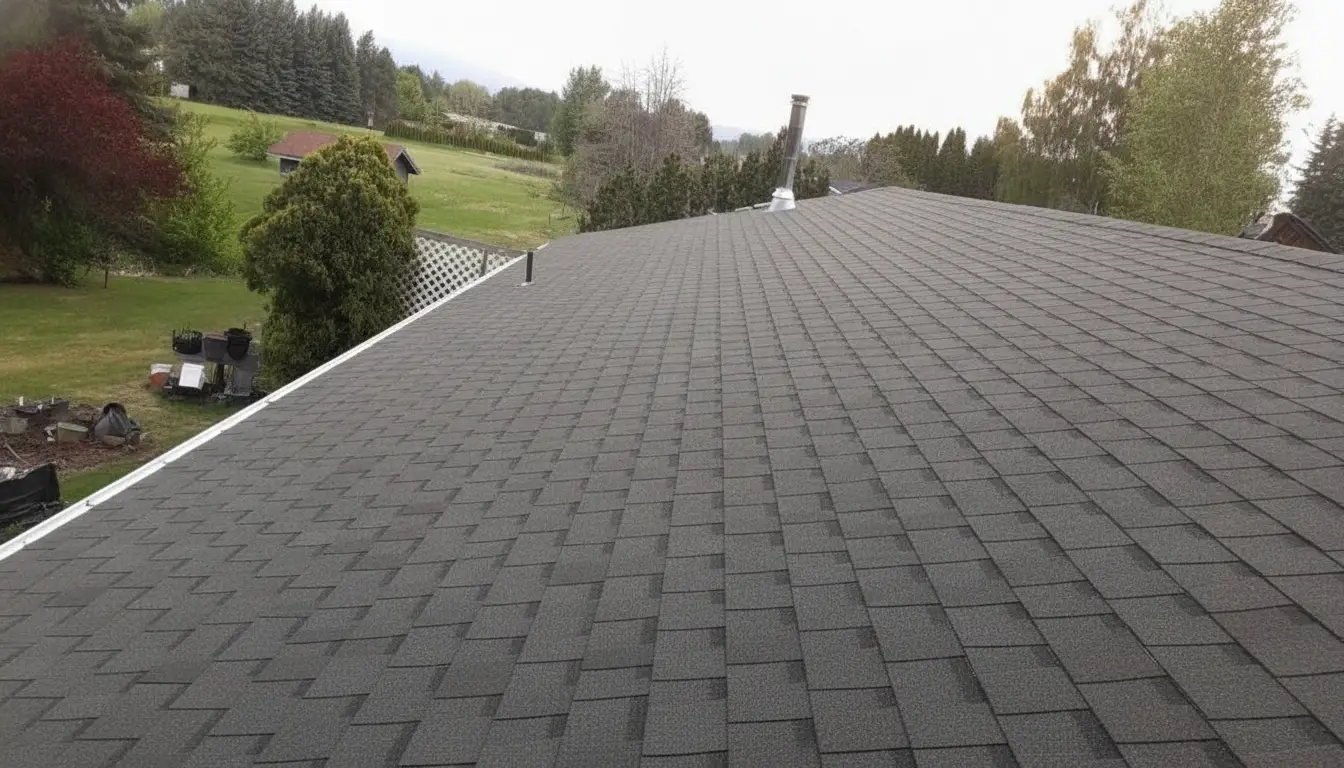
When a roof leaks, most people jump straight to the scariest question: does the whole thing need to be replaced? Sometimes it does. Often it doesn't. A good roofer's first job is to find out what is actually failing, and only then talk about which of three paths makes sense: repair it, recoat it, or replace it.
Start with why it's leaking
Water on the ceiling doesn't always come from the spot directly above it. It can run along a rafter or the roof deck for several feet before it drips. That's why guessing is expensive and tracing the source is worth the time.
One of our customers, Angie DeLeo, put it well in her review. After her roof was replaced she called with a concern, and we came out the same day. In her words, it turned out to be something that had landed on the roof, and not a loose shingle at all. A good look, not a sales pitch, is what settled the question.
Common causes of small leaks include cracked pipe boots, lifted flashing, a few damaged shingles, a clogged valley, or a seam that has opened on a flat section. These are repair jobs, and they're usually the smallest and least disruptive fix.
When a repair is the honest answer
If the problem is local and the rest of the roof is in decent shape, a repair is the right call. Replacing shingles, resealing or replacing flashing, swapping out a pipe boot, or patching a damaged area can put a roof back in service for a good while.
A repair makes sense when the damage is confined to one area, the surrounding material is still sound, and the roof isn't near the end of its expected life. The catch is that repairing a worn-out roof is like patching a tired tire. It works for a while, and then you're patching the next spot.
Where recoating fits
Roof coating is a liquid-applied layer that goes on over an existing roof and cures into a protective, waterproof surface. It's most often used on low-slope and flat roofs, and on mobile home roofs, where the existing roof is still basically sound but the surface is weathered and the seams are starting to let go.
Coating can seal small cracks and seams, reflect sun, and extend what the roof can do, often at less cost and disruption than tearing it off. It isn't magic. It needs a roof that is dry, solid, and clean underneath. Coating over soaked insulation or a deck that's already rotten just hides the problem. A roofer should be willing to tell you when your roof isn't a good candidate.
When replacement is the honest advice
Sometimes a roof is simply done. Signs that point toward replacement include:
- Widespread curling, cracking, or missing material across most of the roof, not just one slope.
- Repeated leaks in different places after repairs, which suggests the whole system is aging out.
- Soft or sagging spots, which can mean the deck underneath has been wet for a long time.
- A roof that has outlived what its type normally delivers, with granules or surface layers wearing through everywhere.
- Damage so spread out that the repair estimate starts to look like a big share of a new roof anyway.
Our website says it directly: leaks should never be taken lightly, because taking them for granted may lead to bigger problems and before you know it, you already need to replace the entire thing. Fixing things early is how you avoid the full replacement, or at least push it back.
Questions worth asking any roofer
Whoever you hire, a few questions will tell you a lot:
- What exactly is failing, and can you show me?
- What happens if I only do the repair, and how long might it hold?
- Is this roof a good candidate for coating, and why or why not?
- If replacement is needed, what are my options for materials?
- Is the contractor licensed and bonded, and can I see the licence number?
- What happens if there's a problem after the job is done?
We are licensed and bonded, and our Washington L&I contractor licence number is SUPERRL010PL. You can look it up on the state's public lookup if you'd like to check for yourself. As for after-the-job problems, a customer, Julie M, wrote that we guarantee our work and will come back out and fix any issue. We'd rather you ask than assume.
What about cost and financing
We won't guess at prices in a blog post, because they depend on the size of the roof, the material, the pitch, and what's underneath. Call for a quote and we'll talk it through. What we can say is that we offer military and senior discounts, so ask about them, and we can finance a new roof. Terms aren't published here, so ask us for the details.
The decision usually comes down to cause, condition, and how long you plan to stay in the building. A repair, a recoat, and a replacement each have a place. Our job is to tell you which one fits, not to sell the biggest one. If you aren't sure where your roof stands, call us at (509) 452-0676, or see our Roof Repair and Roof Coating pages.
Superior Roofing, LLC, (509) 452-0676
Call (509) 452-0676More articles
Buying a House in the Yakima Valley? What a Roof Cert Is and Why Your Lender Asks for One
A roof cert is a short report on the condition and remaining life of a roof, and it's best ordered before you're locked into the purchase.
What a Yakima Roof Goes Through From Fall to Spring, and the Check That Catches Trouble Early
Most winter leaks start as small fall problems, and most of them can be spotted before the first hard freeze.