Mobile Home Roofs: Why They Leak at the Seams and What Coating and Maintenance Do
Most mobile home roof leaks start small, at a seam or a screw, and a little yearly attention goes a long way.
October 8, 2026 · 4 min read
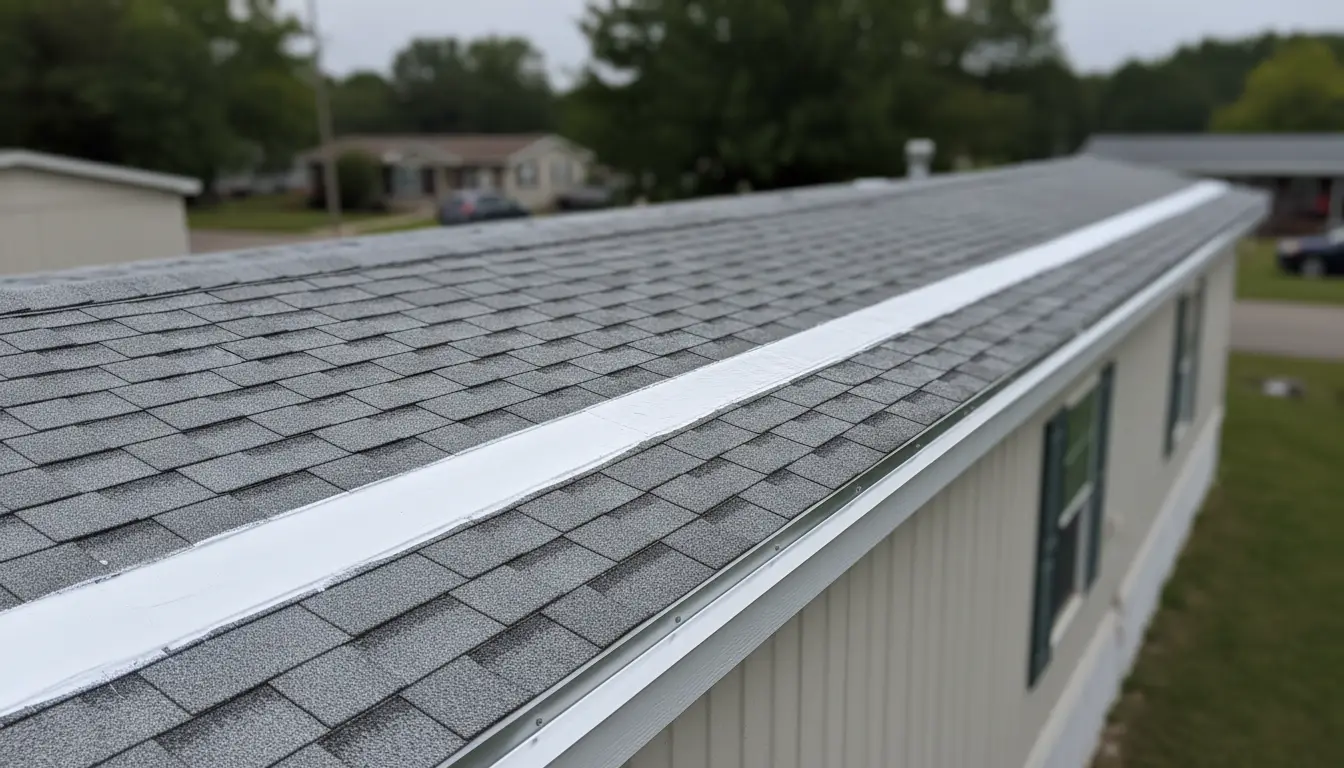
If you own a mobile or manufactured home, you probably know the feeling of looking at a ceiling stain and wondering how it got there. These roofs are built differently from a typical stick-built house, and they tend to leak in predictable places. The good news is that predictable usually means preventable.
How a mobile home roof is different
Many mobile homes have a low-slope roof, often covered in metal panels or a rubber-type membrane, rather than the steep pitch and overlapping shingles you see on a conventional house. A low pitch means water drains slowly, and anything that sits on the roof stays wet longer.
These roofs also tend to be lighter in construction, and they're long and wide, with seams running the length of the home. Every seam, every screw, and every edge is a place water can try to get in. That's what makes maintenance matter more than on a steep shingle roof.
Where the leaks usually start
In general roofing practice, the same spots come up again and again:
- Seams between panels or sheets, where sealant has dried out, cracked, or pulled away.
- Fasteners, the screws or nails holding the roof down, which can back out or loosen as the roof expands and contracts.
- Roof edges and drip edges, where the surface meets the trim and water can slip underneath.
- Penetrations like vents, stacks, and air conditioner mounts, which each need a good seal.
- Low spots where water sits after rain and works on the surface.
None of these are dramatic failures. They are slow ones. A roof that held fine for years begins to weep in one corner, and the water finds a way along the framing before it shows inside.
Why the weather is hard on these roofs
Valley summers are hot and dry, and a metal or membrane roof can get very hot in the afternoon sun. At night it cools. Winter brings frost, freezing, and thaw. All that expanding and shrinking works on seams and fasteners, and over time sealants lose their stretch. Add a few windstorms and the occasional branch, and the surface wears.
That's the basic story of a mobile home roof: not a single big failure, but years of small movement that loosens things up until water gets in.
What roof coating does
Roof coating is a liquid layer applied over the existing roof surface. It cures into a continuous, flexible, waterproof skin. On a mobile home roof, a coating can cover seams and fastener heads, bridge small cracks, and give the whole surface a fresh, sealed finish. Many are white or light-colored, which also reflects sunlight and helps keep the roof surface cooler.
Coating works best on a roof that's still sound underneath. Before applying it, the roof should be cleaned, loose fasteners should be tightened or replaced, and failed seams should be repaired. Putting coating over a problem doesn't fix the problem. A good roofer prepares the surface first and tells you honestly if the roof is too far gone to coat.
We list both Roof Coating and Mobile Home Repair among our services, and we say on our site that we coat, maintain, and repair. If you aren't sure whether your roof needs a repair, a recoat, or something more, call and we'll help you sort it out.
A simple maintenance routine
Maintenance doesn't have to be a big job. A few habits can add years to a mobile home roof:
- Twice a year, in spring and fall, look over the roof from a safe position. Check seams, edges, and around vents.
- Keep the roof clear of leaves, needles, and debris so water can drain.
- Trim branches that hang over or rub against the roof.
- Watch the ceilings inside for stains, soft spots, or a musty smell.
- Address small problems early. A resealed seam today is cheaper than a repaired ceiling next winter.
Please be careful when you're up there. Low-slope roofs on lightly built homes aren't always meant to carry a lot of weight, and wet or frosty metal is slippery. If you're unsure, a ladder at the edge and a good look may be enough to spot trouble, or you can have a pro do it.
When to call someone
Call if you see a stain that's growing, water that comes in during rain, open seams, lifted edges, or loose panels. Small leaks should never be taken lightly, and the sooner someone looks, the smaller the fix tends to be. We can also tell you if the roof is a candidate for coating or needs different work.
We don't publish prices because every roof is different. Call (509) 452-0676 and we'll talk about what you're seeing, or take a look at our Mobile Home Repair page.
Superior Roofing, LLC, (509) 452-0676
Call (509) 452-0676More articles
Buying a House in the Yakima Valley? What a Roof Cert Is and Why Your Lender Asks for One
A roof cert is a short report on the condition and remaining life of a roof, and it's best ordered before you're locked into the purchase.
What a Yakima Roof Goes Through From Fall to Spring, and the Check That Catches Trouble Early
Most winter leaks start as small fall problems, and most of them can be spotted before the first hard freeze.